


2022 was the year that the temperature in England topped 40 degrees Celsius and plummeted to minus 11 degrees Celsius, evidence that extremes of weather are increasingly common as the climate emergency bites.
It was also the year that saw Sherborne Town Council’s plans for de-carbonising the heating and lighting at the Gainsborough Pavilion come to fruition. This was despite difficulties caused by the Covid pandemic and Brexit and induced supply chain issues. When the Gainsborough Pavilion, home to changing rooms and the Sherborne Town Band practice room was built, fluorescent lighting and a diesel boiler were installed. The lights have now been replaced with LEDs giving better light from less energy and the oil boiler has been replaced by air-source heat pumps. These pumps take heat from the outside and use it to heat the water and buildings.
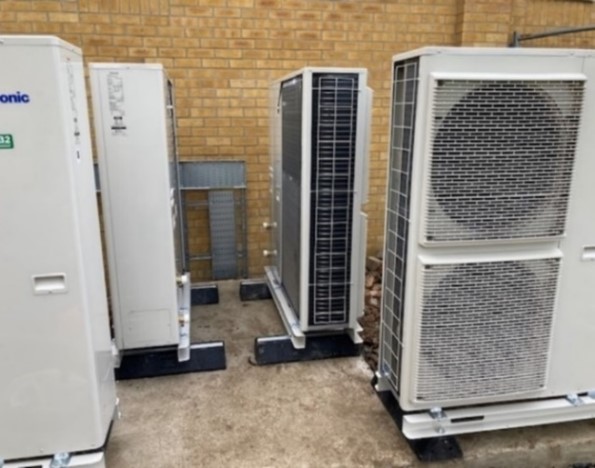
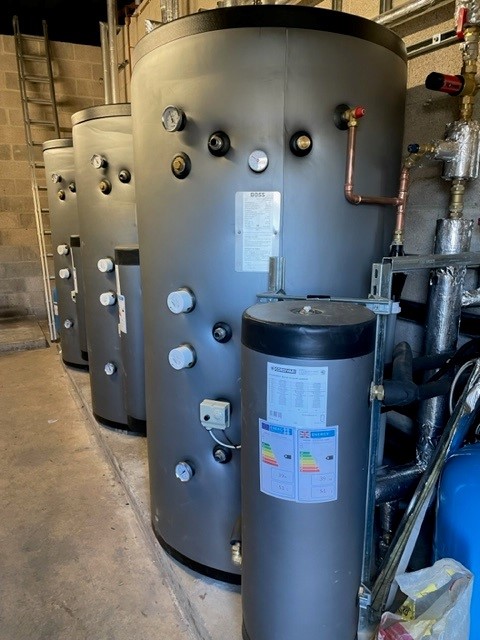
The town band has its air-source heat pump and additional radiators to heat the band practice room. Four more air-source heat pumps warm the changing rooms and three,1,000 litre tanks, hold hot water for showers. Since the end of November the heat pumps have provided three and a half times more heat energy than they use din electrical energy. They work best when it is warm outside but will work well even when the temperature outside is 5 degrees Celsius.
You can see the 42 solar PV panels on the roof. It’s a nominal 17kW system to produce 14,700 units of electrical energy each year, 14,700 kilowatt hours (kWh) or 14.7 megawatt hours (MWh). This energy will provide light and heat with the excess energy going to the Grid. On short cold days, we will import energy from the Grid.
Low Carbon Dorset provided part of the funding towards these energy measures.
A display monitor, installed on an exterior wall near the entrance of the site, shows the electrical energy currently being generated, the total energy generated and the total carbon dioxide saved from the start of the project.
During the short dark days of November, December and January, almost one tonne (1T) of carbon dioxide was saved. Over recent months nearly four tonnes have now been saved in total. No doubt more carbon dioxide will be saved during the coming summer months.
Additional work has been undertaken to the existing showers and basins to save water and increase service reliability. A new scale inhibitor has also been installed to reduce the amount of limescale formed in hard water areas.
For information on the carbon footprint for Sherborne – and other places – go to impact-tool.org.uk. “impact” is a community carbon calculator.
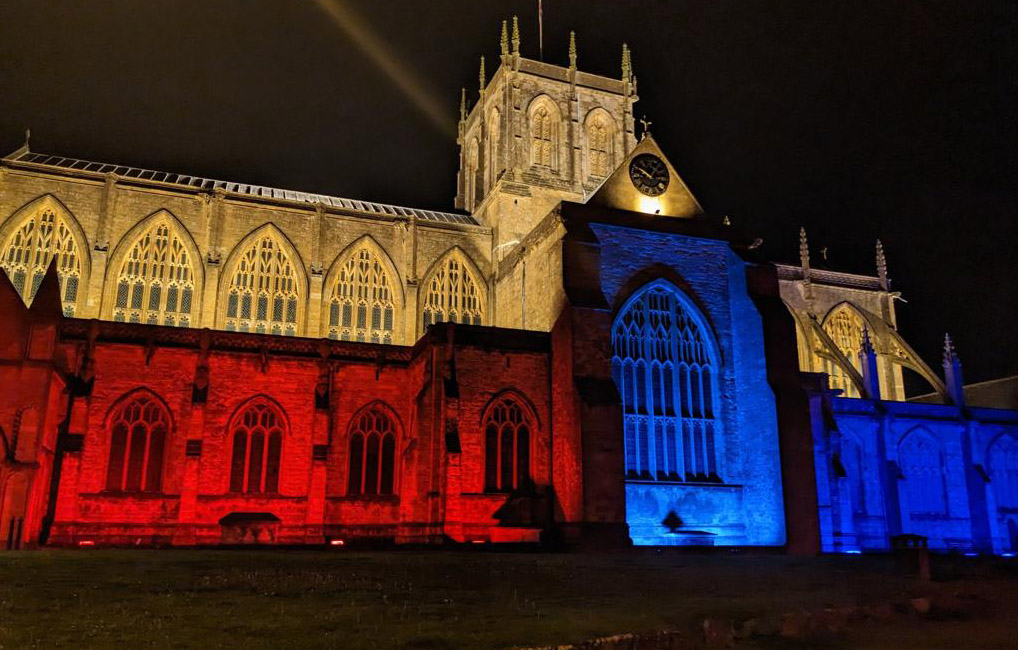
The external lighting on the Abbey frontage has now been changed to LED multicolour changing bulbs saving energy and maintenance costs moving forward. This new lighting will provide an opportunity to light up the Abbey with a host of themed colours moving forward. The new lighting was completed just prior to King Charles III Coronation and looked magnificent in red, white and blue.